Author Archives: Claire

Immune-related Adverse Events and The Balancing Act of Immunotherapy

Michael Conroy1, Jarushka Naidoo1,2

  1. Beaumont RCSI Cancer Centre, Dublin, Ireland
  2. Sidney Kimmel Comprehensive Cancer Centre at Johns Hopkins University, Baltimore, MD,United States of America

Oncology treatments have historically been based around ‘cytotoxic’ chemotherapy, which targets cancers by killing rapidly dividing malignant cells. This is associated with a cadre of side effects caused by similar harm to rapidly dividing normal cells – hair loss, mouth ulcers, and infertility. One of the greatest recent developments in cancer care has been the use of immunotherapies – treatments that harness the body’s own immune system to kill cancer cells. These have been proven remarkably effective in some cancers, including lung cancer and melanoma, and show promise in many others.

These treatments tend not to cause significant hair loss, sores or nausea like traditional chemo. However, they are associated with a unique class of side effects termed ‘immune-related adverse events’, or irAEs. These are harms, which can affect any organ in the body, resulting from one’s own immune system being inadvertently driven to target body tissues.

These events are diverse in type, ranging from an underactive pituitary gland in the brain to inflammation in the muscle of the heart. They are also variable in time of onset, severity and mechanism. Some aspects are well-understood, such as the fact that these conditions typically respond to treatment with steroids – medications which reduce the activity of the immune system. However, some issues are less clear. The best means of diagnosing these problems are not known in many cases, and practice can vary among hospitals. It is not certain whether giving steroids for irAEs will lead to the cancer becoming active again, whether irAEs will be more common in patients who already have an autoimmune disease (like rheumatoid arthritis), and how to manage irAEs that do not respond to steroids.

More recently, evidence has been published to suggest that the micro-organisms that live in our gut (the gut microbiome) can influence whether tumours respond to immunotherapy, but also whether irAEs respond to treatment. In one interesting example, a transplant of stool from a healthy patient to two patients with severe immunotherapy-related colitis (bowel inflammation) led to the colitis resolving in both patients. It was suggested that the healthy micro-organisms from the donor led to improvement in the condition.

Therefore, this is an area of research with some areas of agreement but many areas of uncertainty. Knowledge regarding irAEs is developing very rapidly and this should help us in future to provide patients with the best available treatments while minimising their side-effects.

Click here to read the full article.
Momentous day for cancer clinic trials in Ireland as HRB announce €21 million investment

Beaumont RCSI Cancer Centre have welcomed the €21 million investment in cancer clinical trials announced by the Health Research Board. The National Clinical Trial Network will be hosted by RCSI University of Medicine and Health Sciences led by Professor Ray McDermott (Chief Scientific Investigator, Cancer Trials Ireland).

Beaumont Hospital – RCSI University of Medicine and Health Sciences Cancer Trials Group led by Professor Patrick Morris and hosted at RCSI is one of six Cancer Clinical Trials Groups to receive funding as part of this momentous investment.

The HRB funding will tackle childhood and adult cancers, making a real difference to the lives of cancer patients, allowing them more access to cancer trials by increasing the resources and expertise required to conduct them. Click here for further information on the HRB announcement

Advancing treatment for oesophageal cancer in Ireland

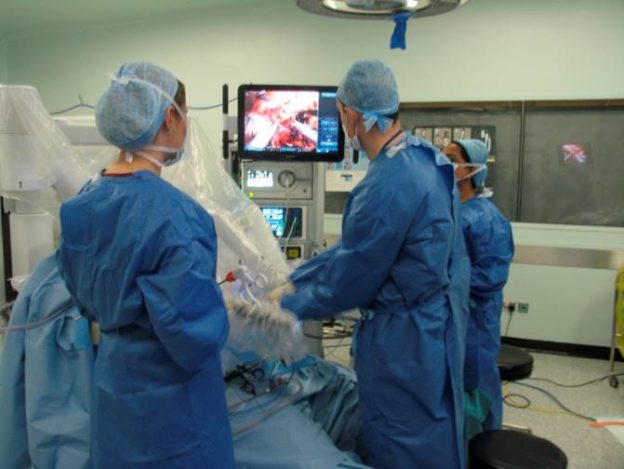
October 8th 2021 was a significant day for the treatment of oesophageal cancer in Ireland. The first totally robotic assisted oesophagectomy was performed successfully at Beaumont RCSI Cancer Centre, the first surgery of its kind to be performed in the country.

The surgery was performed by Mr. Will Robb and his team using the da Vinci X robotic surgical platform. Mr Robb and his team have built a depth of experience with minimally invasive surgery for resection of oesophageal cancers  which applies the latest technology to minimally invasive surgery.

The benefits of minimally invasive surgery for oesophageal cancer resections are clear. This technique greatly reduces the trauma of this operation, reduces complications and makes recovery easier.

Beaumont RCSI Cancer Centre are the only hospital in Ireland with a team delivering robotic surgery for oesophageal cancer and 1 of only 3 units in the United Kingdom and Ireland with a team and the surgical expertise able to provide this surgery.

For more information about our Upper GI service including minimally invasive surgery and Enhanced Recovery Programme click here

OECI Cancer Accreditation Peer Review Visit

Beaumont RCSI Cancer Centre welcomed members of the Organisation of European Cancer Institutes (OECI) for a peer review visit on October 19th and 20th. Peer review is performed by experts from OECI cancer centres/institutes across Europe and this visit was one of the steps in our Cancer Centre Accreditation & Designation journey. The OECI quality assessment programme is a supportive voluntary measure for cancer centres/institutes which has been designed and developed by a wide range of European experts from European Oncology Societies, Patient Organisations and staff from OECI members.

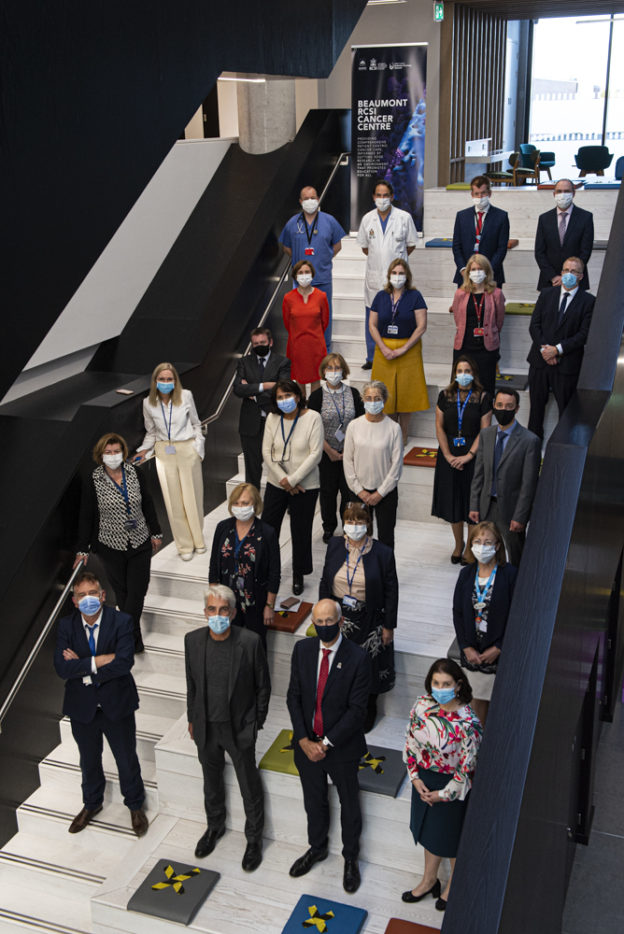
Pictured above are the members of our Cancer Centre Board, Cancer Centre Executive, members of the  Executive Management Team and the OECI Peer Review Team.

Photograph: Marta Staszak

Decoding Cancer Podcast – How does Immunotherapy work?

Tune in to the Irish Cancer Society’s Decoding Cancer podcast on September 27th. Dr Robert O’Connor is joined by our Dr Jarushka Naidoo & lung cancer patient advocate Seamus Cotter to discuss the ins-and-outs of immunotherapy as a cancer treatment, what types of patients it is being proven to benefit, and the latest developments in promising new immunotherapy treatments, including studies being supported by the Irish Cancer Society.

Click Here to register for this event.

The White Ribbon Project

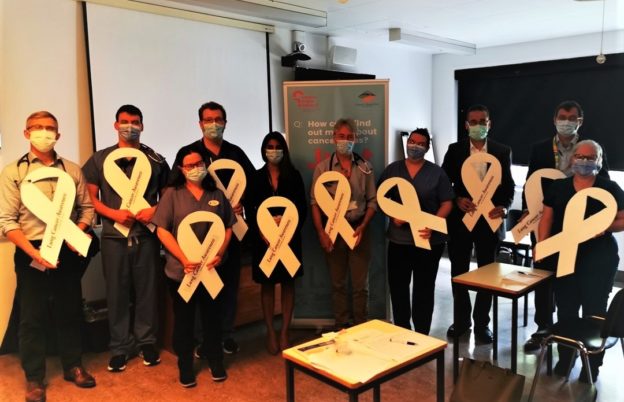
Beaumont RCSI cancer centre was the first cancer centre in Ireland to be honoured with the ‘White Ribbon’ for lung cancer.  The White Ribbon Project (@TheWRP4LC) is a lung cancer awareness/advocacy movement that was started in the US last year by former NFL player Chris Draft, lung cancer survivor Heidi Onda, and her husband GP Pierre Onda. They have been making large white wooden ribbons that say ‘Lung cancer awareness’. These are sent to the major cancer centres in the US and now internationally, who are leading efforts in lung cancer awareness, research and advocacy, as well as all those involved in progress for lung cancer.